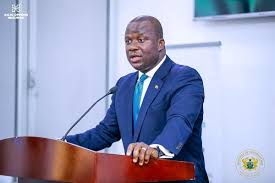
The Chairman of Advocates for Christ, Edem Senanu, has questioned how Parliament allowed procedural and drafting concerns to emerge after passing the Human Sexual Rights and Family Values Bill, describing the developments as alarming.
Speaking on JoyNews’ PM Express on Tuesday, Mr Senanu said the bill’s successful passage for a second time demonstrated that a broad national consensus still exists on the issue.
He noted that many observers had expected the legislation to face difficulties after it had to restart the legislative process following the previous Parliament’s expiration.
“The positive, if for a second time we have arrived at passing the bill, it just tells you that, truly, that unanimity has always been there,” he said.
“After the first time, having to start the whole process again, one would think that it would get stuck somewhere, but to the extent that they completed the same thing a second time, this tells you that there is a consensus in general on the issue.”
Despite that consensus, Mr Senanu said he was troubled by questions now being raised about parliamentary procedure, including concerns over quorum and compliance with required legislative steps.
“The part that is questionable for me is, how come the house of procedures and records, I could get it wrong. How would they not recognise that certain steps have not been followed, or the quorum was not there?”
“That raises alarms for me.”
The bill has recently become the subject of renewed debate amid concerns about parliamentary procedures and comments from political leaders on the next steps before presidential assent.
Mr Senanu said his concerns extend beyond procedural matters.
According to him, his review of the latest version of the bill revealed provisions that he believes require further refinement, particularly sections dealing with exemptions.
“I took a look at the new version, and then especially the exemptions. The exemptions are one in particular that gets me worried.”
He suggested that even if the bill had been transmitted to the President, there would still have been grounds to seek further scrutiny of some provisions.
“So already in my mind, even if it had gone on to the President, the likelihood we are going to appeal to the President that listens, looking at Article 106, there’s at least one of those exemptions, looking at the number of mental organisations, and whatnot, which is not tight.”
Mr Senanu argued that the current wording could leave room for legal uncertainty and unintended interpretations.
“It provides a lacuna for the kind of information we don’t want to be out there.”
He said Parliament would need to clarify the provisions to avoid future disputes in court.
“We would still have required that this must come back to parliament to be very clear. Let’s qualify the type of information they are talking about, so that when there’s a case, and we go to court, we can be clear whether there is intent to do something that breaches the law or not.”
While expressing confidence that the bill remains close to completion, he urged Parliament and the Presidency to resolve the outstanding issues quickly.
“It’s only between parliament and the president. If there are a few things they need to resolve, they need to get their house in order, resolve them, and move on.”
He maintained that the concerns currently surfacing should have been addressed long before the bill reached this stage.
“The issues coming up are things that ideally should not even arise, whether it is a quorum issue, whether it’s a process issue, whether it is exemptions that have not been properly crafted and are providing loopholes. These are concerns that we will need to address.”